Anneshia Hardy | The Hardy Exchange
Winter Study: What I’m Reading to Expand My Narrative Work
Winter, for me, has always been a season of rigor. A season of sharpening. A season where my mind feels the most open to wrestling with new theories, revisiting old frameworks, and pushing my own narrative work into deeper, more expansive places.
This winter, my reading list reflects where I am intellectually and creatively: standing at the intersection of Black political thought, cultural memory, media, and movement work; refining the Applied Cultural Meaning & Memory (ACMM) Framework™, a liberatory narative methodology I’ve been developing; and feeding the part of myself that is an artist, scholar, practitioner, and Southern-rooted storyteller.
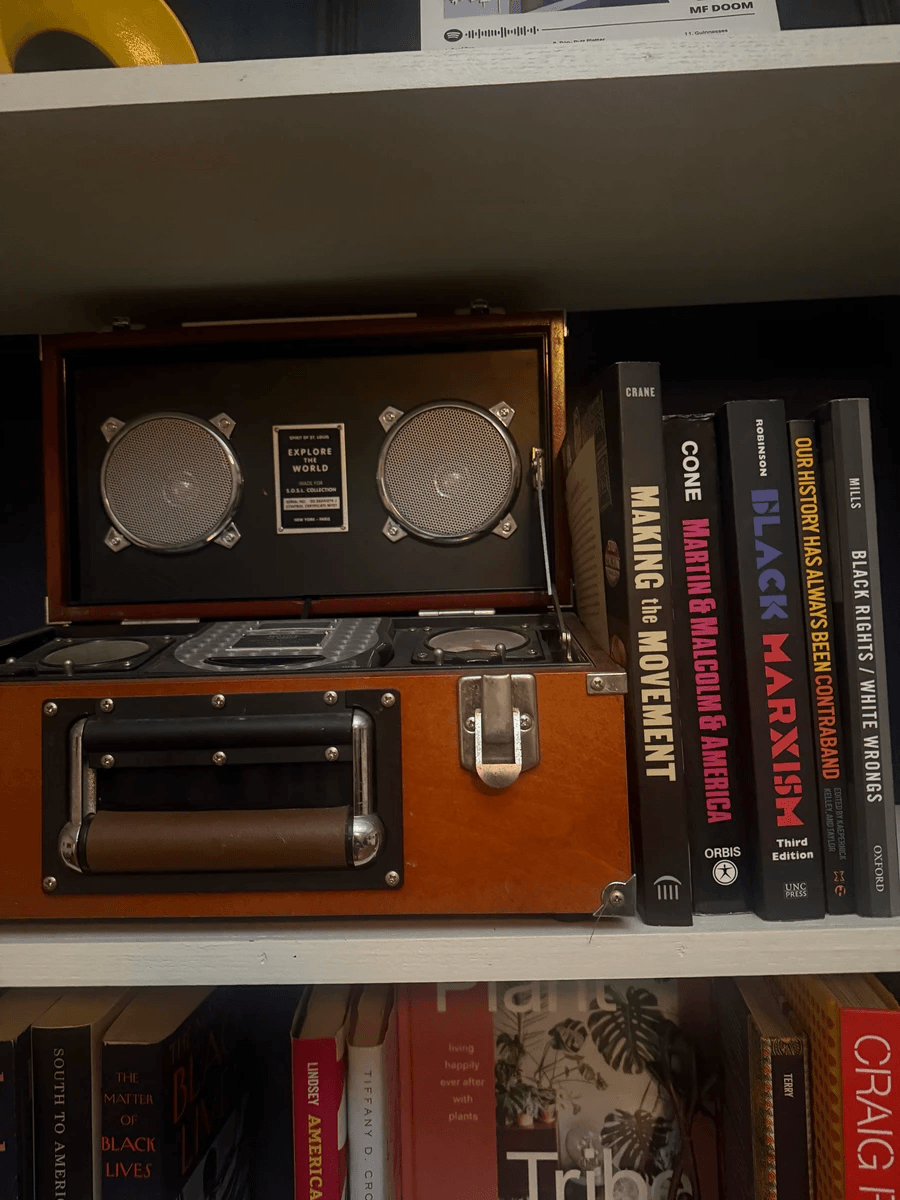
These books are not light reads. They’re texts that demand attention, discipline, and openness; books that stretch how we think about power, liberation, the history that shaped us, and the future we must write.
Below is what I’m studying this season and why each text matters to my winter practice.
Making of the Modern Black Radical Imagination | Cedric Johnson, Paul Ortiz, et al. (Crane)
This book anchors me in the radical Black imagination that has shaped political struggle for generations. It’s a reminder that imagination has always been a strategy, a survival tool, and a blueprint for what we’ve insisted is possible.
This text fuels the creative side of my narrative work, pushing me to explore how our collective memory and cultural meaning-making activate new horizons for movement building.
Martin & Malcolm & America | James Cone
As someone who lives at the confluence of politics, culture, and ethical struggle, Cone’s comparative study of Martin and Malcolm is essential. He doesn’t flatten their differences but instead reveals the complexity of their moral and political visions.
For my winter work, especially as I refine my liberatory narrative framework, Cone helps me think about duality, contradiction, and narrative responsibility.
Black Marxism (Third Edition) | Cedric J. Robinson
Robinson’s theory of racial capitalism is foundational for understanding the world we’re navigating and the systems we’re trying to transform. It’s not just a political text—it’s a narrative text that exposes the stories, myths, and ideologies that uphold power.
This book stretches my intellectual practice. It deepens the structural analysis that undergirds my narrative organizing work and strengthens the ideological spine of the ACMM Framework™
Our History Has Always Been Contraband | Edited by Robin D.G. Kelley, Colin Kaepernick, and Keeanga-Yamahtta Taylor
This anthology speaks directly to the political climate we’re in—and the one we’re preparing for. It is a reminder that Black studies has always been dangerous to systems of power because it invites us to see clearly, act boldly, and imagine otherwise.
This book feeds both my creativity and my discipline. It reinforces the truth that knowledge itself is a political act, especially in a time when our stories and histories are under attack.
Black Rights / White Wrongs | Charles W. Mills
Mills has a way of naming the architecture of racial ideology without flinching. His work helps me interrogate the philosophical roots of injustice and the narratives that justify it.
As I refine my narrative approach, Mills keeps me grounded in the understanding that narrative is not just messaging, it’s metaphysics. It shapes how societies define truth, power, legitimacy, and the boundaries of the possible.
Why This Winter Reading List Matters
Each book on this list is part of a larger ecosystem of thought that I’m drawing from to refine my scholarship, deepen my narrative analysis, and strengthen the creative work I’m building across Alabama and the Deep South.
This winter is not about reading for leisure, it’s about reading for practice, expansion, and preparation. It’s about feeding the creative and intellectual muscles that allow me to tell stories that honor our history, challenge dominant narratives, and build ideological power for our communities.
This is the season to study so we can dismantle what harms us.
This is the season to sharpen our tools so we can build what will free us.
This is the season to create like our liberation depends on it, because it does.
And I’m excited to read my way into everything 2026 is calling me to do.
About the Author
Anneshia Hardy is a narrative strategist, scholar-activist, and social impact entrepreneur committed to leveraging storytelling and messaging for transformative social change. As Executive Director of grassroots communications and media advocacy organizations, Alabama Values and Alabama Values Progress, she leads efforts to strengthen the pro-democracy movement in Alabama and across the South through strategic messaging and digital strategies.
Co-founder of Blackyard LLC, Anneshia equips changemakers to amplify their impact in marginalized communities. With over a decade of experience, she has conducted narrative and messaging trainings for organizations like the NAACP and the Obama Foundation. Anneshia has also shaped strategies for landmark voting rights cases, including Allen v. Milligan and Louisiana v. Callais Rooted in the belief that culturally relevant narratives can drive equity and inspire action, she bridges academic insight and real-world advocacy to create lasting change.